The practical guide
Student Living in Lancaster: The Complete 2026/27 Guide
Areas, house types, deposits, bills and contracts for student living in Lancaster in 2026/27, with real rooms from £125 a week, bills included.

In this story
Student living in Lancaster is one of the easier versions of this decision in the UK, mostly because the city is small enough to understand. You are not choosing between forty neighbourhoods and six transport zones — you are choosing a campus, a street and a household, and then getting the contract right. This guide walks through all four for 2026/27: what the year actually looks like, what you can rent, what it costs, and the deposit and contract details that decide whether the whole thing goes smoothly.
What living here is actually like
Lancaster is a small historic city in the north west with two universities in it, a castle at the top of town, a canal running through the student streets and Morecambe Bay a short hop west. The centre is compact enough to cross on foot without planning it, which quietly shapes everything else: most students here walk most places, most of the time.
It is also a city where rent per person tends to be gentler than in the big student cities, without the trade-off usually attached to that. You can live centrally on a student budget in Lancaster in a way that is much harder in Manchester or Leeds — and living centrally is what makes the walking work.
The year has a rhythm worth planning around rather than being surprised by: freshers in October, house-hunting conversations from November, exams in the darkest weeks of January, and the park and the towpath back in use by spring. Our guide to student life in Lancaster takes that term by term.
What you can actually rent here
Private student housing in Lancaster comes in three broad shapes, and picking the right shape early saves you weeks of looking at the wrong properties.
A room in a shared house
The most common option and usually the cheapest per person. You get your own bedroom and share the kitchen, bathrooms and living space. Our rooms run from £125 to £139 per person per week for 2026/27 with bills included, and the cheapest of those is an individually let room, which matters if you are looking on your own rather than as a group.
A whole house for a group
Lancaster's student stock is largely Victorian and Edwardian terraces, which is why the group sizes here go higher than you might expect — our houses run from small groups right up to twenty bedrooms. Bigger is often cheaper per person, because a house has costs that barely move with the number of people in it: one broadband line, one boiler, one roof. Split those more ways and everyone's weekly figure comes down. Our shared student houses in Lancaster page sets out how joint tenancies and individual room contracts differ. Five is the size we are asked for most often, and a five-bed house for a group is where the per-person maths usually starts to work.
Above that, we let 6 to 20 bedroom houses on the central streets and Gregson Road, and the bathroom ratio matters more than the bedroom count once a group gets past eight.
A studio or a one-bed
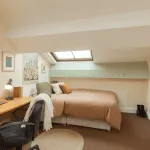
Self-contained living: your own kitchen and bathroom, no housemates to negotiate with. It suits postgraduates, mature students, couples and anyone who genuinely needs quiet to work. It costs more per person — our North Road studio is £229 per week for single occupancy, bills included — because one person carries every fixed cost alone. That premium is the honest price of privacy, and for some students it is worth every penny. If that is the shape you want, our self-contained student studios page sets out what a week in one actually costs and what the rent covers. If you are looking as a couple, ask us about a one-bedroom flat instead, because the North Road studio is single occupancy.
What it costs, and what "bills included" has to mean
The single most useful thing you can do when comparing Lancaster properties is convert every option to the same number: cost per person per week, with utilities and broadband inside it. Do that and a lot of apparent bargains stop being bargains. A £110 room with bills excluded is rarely cheaper than a £125 room with them included, once a northern winter has had its say about the heating. If the weekly figure is the thing that has to come down, our lowest-priced rooms are set out with the same bills-included package as everything else we let.
A bills-included package should be written down and specific. Ask for it in writing and check it names gas, electricity, water and broadband at minimum. Every one of our homes is bills included, and we confirm the exact package in writing before anyone signs — not on a viewing, where it is easy to hear what you hoped for.
Watch for fair-use clauses. Some providers cap energy within an inclusive package, which is reasonable in principle and worth understanding in practice: ask what the cap is, what happens if you exceed it, and whether you would be told before a charge appeared. A package you understand beats a package that sounds generous.
Then think about timing as well as totals. Our rent is paid monthly in even instalments, so the housing line in your budget is the same number every month and never spikes against a termly student finance payment. For the full arithmetic — rent, bills, food, travel and the costs that land before you move in — work through our Lancaster student living cost guide.
Deposits, explained properly
Deposits cause more confusion than anything else in a first tenancy, largely because there are two different payments involved and they behave differently. This is general information rather than legal advice, and your students' union advice service can talk you through your own situation.
Holding deposit versus security deposit
A holding deposit reserves a property while the paperwork is done. It is capped at one week's rent, and it does not have to be protected in a scheme. Once you enter into the tenancy it should either be returned to you or put towards your security deposit — ask which, and get the answer in writing. Ours is one week's rent.
A security deposit is the money held against damage or unpaid rent at the end of the tenancy, and that one must be protected. In England and Wales it is capped at five weeks' rent where the annual rent is below £50,000, and six weeks above that. Ours is around one week's rent on most of our properties, which is well under the cap.
Where your money has to go
Your landlord must put your security deposit into a government-approved scheme within 30 days of receiving it. There are three in England and Wales:
- Deposit Protection Service (DPS)
- MyDeposits
- Tenancy Deposit Scheme (TDS)
Protection is not just paperwork. It means the money is held somewhere your landlord cannot spend it, and it gives you access to free dispute resolution if you disagree about deductions at the end — an independent adjudicator rather than an argument you have to win. Our deposits are protected with the TDS.
Check it yourself. You should receive the scheme details after you pay, and you can verify the deposit is registered directly with the scheme rather than taking anyone's word for it.
If it is not protected
A tenant whose deposit was not protected can take court action to have it repaid, and the court can order the landlord to pay compensation of up to three times the original deposit. You do not need to know the detail of that to benefit from it — you just need to check, early, that your deposit is where it should be.
Getting it back at the end
The work that gets a deposit back happens on the day you move in, not the day you move out. Take dated photographs of every room, including the things you did not break, and keep them. Check the inventory carefully and query anything that does not match before you sign it. Keep every message with your landlord in writing.
Then, when the tenancy ends, photograph it again and chase the return promptly rather than letting it drift into the summer. Deposits that get complicated are almost always deposits that nobody looked at for six months.
Choosing where to live
The area question in Lancaster is really a campus question. The University of Cumbria's Lancaster campus is on Bowerham Road and is walkable from most central streets. Lancaster University is at Bailrigg, about three miles from the city centre, on a corridor the university describes as running at least 14 buses an hour during the day in term time (Source: Lancaster University).
That means a Cumbria student is usually choosing a walk and a Lancaster University student is usually choosing a bus route — two different decisions that look identical on a listings site. Most of our homes are on the city-centre streets: Queen Street, North Road, King Street and Penny Street, plus Gregson Road on the Moorlands side and Meadow Street in Fairfield. For door-to-campus times and an honest read on each area, use our Lancaster student area and commute guide.
Whatever you shortlist, test the journey home rather than the journey in. The morning trip is planned, shared and short. The evening one is the one that decides whether a house works in November.
When to start looking
For a September 2026 move-in, the widest choice sits roughly from January through to spring, and there is genuine availability well past that point — later in the cycle, individual rooms in established houses come back at the same weekly rates, which is often the cheapest way in for one person.
So start early for choice, not out of panic. Nobody should sign a year of their life in an afternoon because a listing said "going fast". Book viewings, see the properties in person where you can, and bring the whole group so that everybody has actually stood in the kitchen. When you are ready to see two or three in a morning, get a viewing in the diary and bring as much of the group as you can — one visit that answers everyone's questions beats four separate ones.
If you are coming through Clearing, the timetable is different and much shorter — A-level results day is Thursday 13 August 2026, and housing decisions get made in the days after it. Our Lancaster results day and Clearing guide sets out what to do in what order.
Questions worth asking, and flags worth pausing on
Ask every landlord, agent or provider the same things, so the comparison is a real one:
- What is the cost per person per week, and exactly what does the rent include?
- How many weeks is the tenancy, and is there a summer retainer? Ours typically run 48 to 50 weeks with no retainer, so you are not paying twice for months you are not there.
- Which scheme will protect the deposit, and how much is it?
- How quickly do you respond to repairs, and who does the work? We aim to respond within 24 hours.
- Is this a joint tenancy or an individual room contract, and what happens if someone leaves?
- What do you need from a guarantor?
- Are you accredited? Look for Lancaster University Homes approval, NRLA membership and an HMO licence where one is required — we hold all three.
And pause on these: refusing to let you view before you pay anything, pressure to decide today, requests for cash, deposit arrangements that avoid a named scheme, and a reluctance to put the bills package in writing. None of those is automatically fatal, but every one of them is worth a second question.
Questions students ask
Can I live with my partner?
Often yes. A studio or a one-bed works for two people in a way a room in a shared house does not, and some shared houses are fine with it while others are not. Ask before you apply rather than after — occupancy is usually written into the contract.
What if I do not know anyone to live with?
Plenty of students are in exactly that position, and individual room lets exist for it. Tell whoever you are enquiring with that you are looking alone, ask who is already in the house, and take the time to meet people before committing. Your students' union will also point you at housemate-finding routes.
Do I need a guarantor?
Most UK landlords ask for one, so ask early and find out where you stand before you get attached to a property.
Can I bring a car?
Sometimes, but check the specific property rather than the area. City-centre student housing often has no allocated parking, while some of our properties describe free on-street parking and others offer private parking at an additional cost. Lancaster is compact enough that a lot of students find they do not need a car at all.
Do students pay council tax in Lancaster?
A household where everyone is a qualifying full-time student is generally exempt — but the exemption is not always automatic. Somebody in the house usually has to send proof of studies to Lancaster City Council, so do it early in the year rather than after a bill arrives.
How long are student tenancies here?
Typically most of the year. Ours usually run 48 to 50 weeks with no summer retainer, which means the property is yours over the summer rather than being something you pay a reduced rate to hold. Always check the number of weeks before comparing two weekly rents — a cheaper week over more weeks is not always cheaper.
Where to go next
Once you know your campus, your budget per person per week with bills in, and whether you are looking as a group or on your own, the shortlist gets short very quickly. Tell us those three things and we will come back with what genuinely fits from our current Lancaster student homes — and say plainly when nothing does. You can call the office on 01524 888 151 or drop in at 42 North Road, LA1 1NY, and we will book you a viewing for 2026/27.