Skip to content
Bayt
WhatsApp Call
4.9 from 22 Google reviews

Bayt Student Living

How to choose student accommodation in Lancaster: an honest checklist

This guide is written to be useful whoever you end up renting from. It covers what to compare, what to ask, what should worry you, and where to read reviews that were not written by the landlord. Bayt is a Lancaster student landlord and says so plainly below, including the cases where another type of accommodation would suit you better. Sources checked on 28 July 2026. General information, not legal advice.

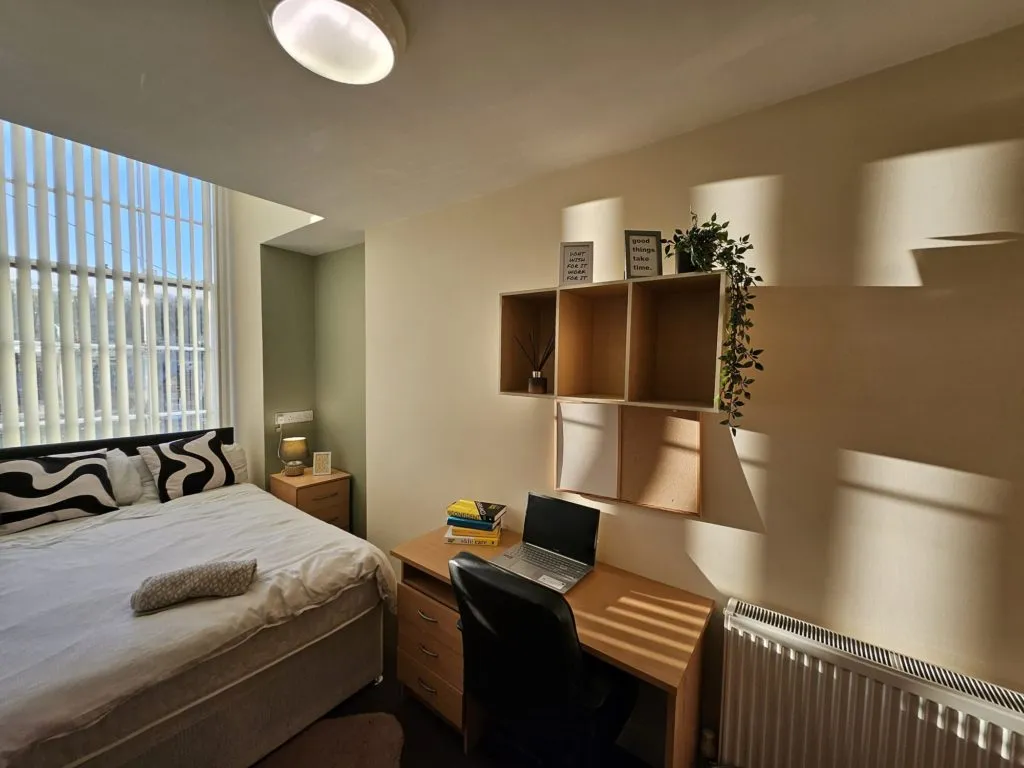
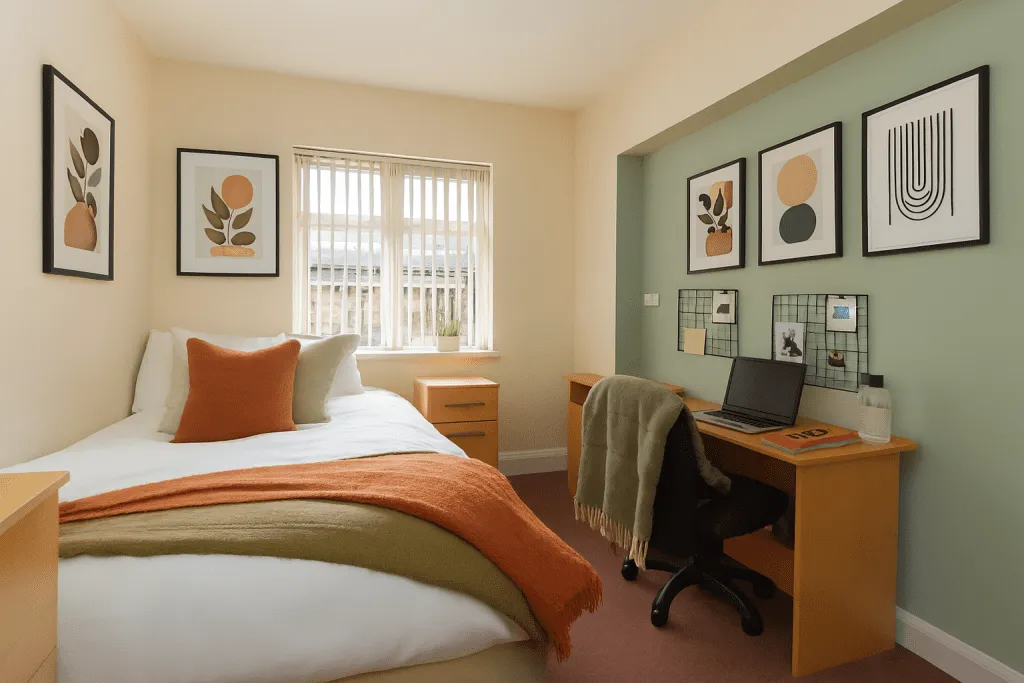
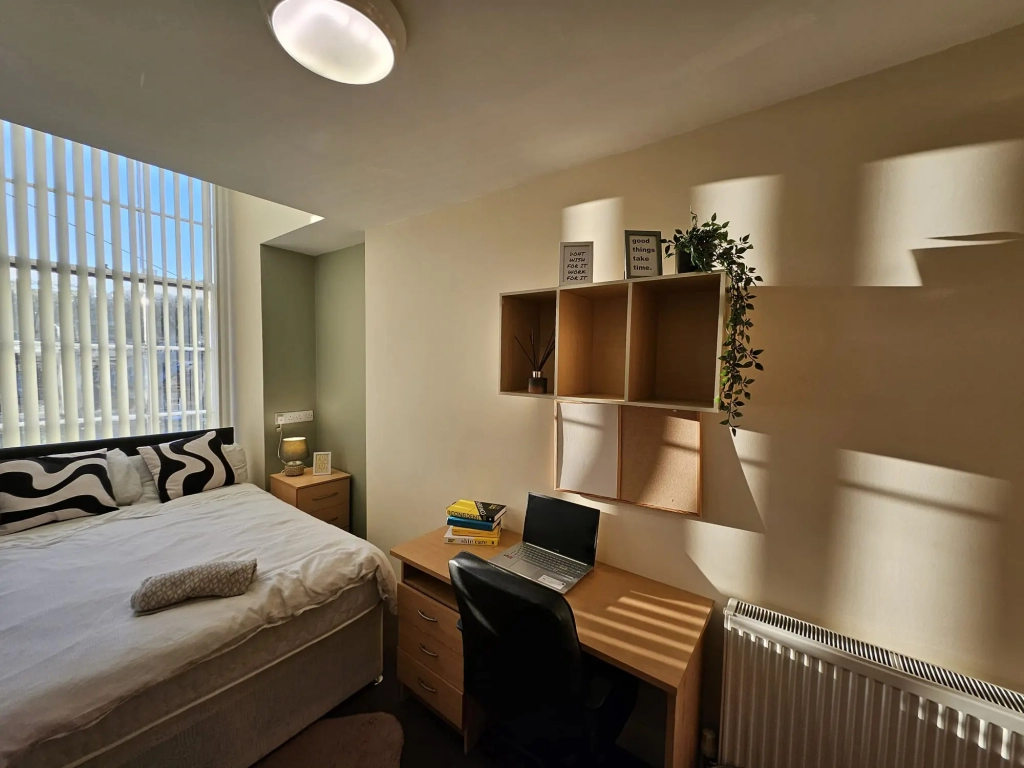
Furnished Bayt student bedroom with desk in Lancaster

Quick answer

How do you choose the best student accommodation in Lancaster?

There is no single best student accommodation in Lancaster, because halls, purpose-built studios, shared houses and rooms solve different problems. Score each option on five things: total weekly cost with bills, real door-to-door time to your campus, who you.

The four things that decide whether a Lancaster house works

Compare total cost, not headline rent

One figure per person per week, bills in, for the number of weeks you actually pay for. Add the bus if the walk is over 25 minutes.

Test the real commute

Lancaster University's Bailrigg campus is about three miles from the city with a frequent bus corridor; the University of Cumbria campus on Bowerham Road is walkable from most central streets. Check door to door at your actual class times.

Read the contract, not the advert

GOV.UK states tenancies have had no fixed end date since 1 May 2026. Ask what the landlord expects, in writing, and check the deposit is capped and protected.

Check reviews the landlord did not write

StudentCrowd, Google reviews, your students' union advice service and the university's accredited-landlord route are all independent of the person letting you the house.

Why "best" depends on which student you are

Search "best student accommodation in Lancaster" and you get ratings aggregators and Top 5 listicles, because that is what the question deserves: a comparison, not a company telling you it is the best. So this page does not do that. It gives you the framework a good adviser would use, applies it to every kind of Lancaster accommodation, and tells you where Bayt fits and where it does not.

The honest starting point is that "best" is not a property, it is a match. A first-year who wants to meet people is best served by university halls. A postgraduate who needs quiet and a long contract is often best served by a purpose-built studio. A group of six who want a whole house, a kitchen big enough to argue in and the lowest per-person cost in the city are best served by a shared Victorian house. These are different answers to the same query, and any page that gives you one answer is selling something.

The second honest point is that the cheapest headline rent is rarely the cheapest year. A room advertised at £110 a week without bills and a room advertised at £135 with gas, electricity, water and broadband included are not £25 apart. Work in total weekly cost, per person, for the number of weeks you are actually paying for — and add the bus if the house is not walkable to your campus.

The third is timing. Lancaster's letting cycle runs a long way ahead: groups form in the autumn term for the following September, winter is the busiest signing window, and there is still real choice through spring. Being early does not get you a better house. Being ready does — a group that has agreed budget, areas and dealbreakers by November chooses well, and a group that panics in October signs something it regrets.

The fourth is that the law changed on 1 May 2026, and a lot of the advice still circulating online is out of date. GOV.UK states that assured shorthold tenancies were abolished in England on that date and that new private tenancies are assured periodic tenancies with no fixed end date, which a tenant can end with two months' written notice. That changes what "signing for the year" means, and it is worth understanding before you compare two contracts. Checked 28 July 2026; confirm the terms of your own agreement.

Quick checks before viewing

  • Review rent and included bills
  • Ask about deposit protection
  • Check travel time to campus
  • Share your group size and year

A checklist for comparing any Lancaster student landlord

A five-step decision framework

Do these five steps in order. Most bad student housing decisions in Lancaster come from doing step four first: falling for a specific house before the group has agreed a budget ceiling, an acceptable commute or who is actually in the group. Every question that gets skipped at that stage comes back in February, usually as an argument about money. The order below costs one evening and saves a year.

  • Agree the group and the budget ceiling before you look at a single property. Decide the maximum per-person weekly figure everyone can genuinely afford, and whether that figure is with bills or without. A group that has not had this conversation will have it in a hallway during a viewing.
  • Fix your campus and your acceptable travel time. Lancaster University students at Bailrigg are choosing a bus route; University of Cumbria students at Bowerham Road are usually choosing a walk. Write down the maximum door-to-door minutes you will accept at 9am in November, not in July.
  • Choose the accommodation type from the table below, honestly, based on who you are — not on which type your friends are picking.
  • Only now shortlist properties, and shortlist at least three. A group with one option has no negotiating position and no comparison.
  • Score each shortlisted property with the same questions, in writing, before anyone signs anything or pays anything. Every question in this guide should get the same answer twice: once at the viewing and once in an email you can keep.

Lancaster accommodation types, and the honest trade-off of each

Lancaster students choose between six broad options: university halls, purpose-built private halls, a shared house from a private landlord, a room in an existing house, a studio or one-bedroom flat, and commuting from home. Every row below has a real disadvantage, because every one of them does — the right-hand column is the one most provider websites leave out. Read that column first, then the rest.

Type Genuinely best for Typical bills position The honest downside
University halls (on campus) First years, anyone new to the city, and students who want a ready-made social life with zero admin. Bundled into one fee by the university. Least choice over room, area and who you live with, and usually the highest cost per week for the space you get. You are allocated, not choosing.
Purpose-built student accommodation (private halls) Postgraduates, international students arriving alone, and anyone who wants a gym, an en suite and a managed building with staff on site. Usually included or bundled. Costs more per week than a shared house, rooms are smaller, contracts are often long, and it can feel institutional. Purpose-built student accommodation is treated differently in law from a private house, so check your legal position rather than assuming it matches.
Shared house from a private landlord Groups of three to ten who want space, a real kitchen, a garden and the lowest per-person cost in the city. Varies enormously — some included, some not. This is the row where you must check. You are responsible for choosing your housemates and, on a joint tenancy, for each other. Older terraces vary hugely in condition, and one unreported damp patch becomes everyone's problem.
Room in an existing shared house Students searching late, joining a group, on a placement, or arriving mid-year. Depends on the property and the room agreement. You inherit a household you did not choose. The room may be the smallest one left, because it usually is.
Studio or one-bedroom flat Postgraduates, couples where permitted, mature students, and anyone who needs quiet to work. Often included; compare the whole package. The most expensive option per person by some distance, and the loneliest if you are new to the city. Fewer of them exist in Lancaster than demand suggests.
Living at home or commuting in Local students and anyone for whom the maths simply does not work otherwise. Not applicable. You will miss a meaningful part of the social side of first year, and the travel cost and time are real. Worth costing properly rather than dismissing.

What changed on 1 May 2026, and why it matters when you compare

GOV.UK states that from 1 May 2026 the Renters' Rights Act 2025 abolished assured shorthold tenancies in England. Most existing tenancies became assured periodic tenancies automatically, and any new private tenancy is an assured periodic tenancy that runs on a rolling basis with no end date. A tenant can end it with two months' notice in writing, timed to the rent due date or the day before, paying rent throughout. Checked 28 July 2026.

Three things follow that are directly useful when you are comparing providers. A landlord cannot ask for, encourage or accept any rent payment before the agreement is signed, and can then request a maximum of one month's rent in advance — so a demand for a term's rent up front is a question, not a standard. A landlord must advertise a specific price and cannot encourage or accept an offer above it, so nobody should be telling your group it can secure a house by paying over the asking price. And GOV.UK's landlord guidance describes a possession ground for student houses in multiple occupation, covering full-time students on a joint contract in an HMO, which a landlord may only use if they gave notice at the start of the tenancy.

The practical question to ask every landlord you shortlist is therefore new this year, and most students are not asking it: what do you expect about the length of this let, and have you given the student HMO notice at the start of the tenancy? A landlord who answers that clearly has thought about it. A landlord who has not heard of it has not.

This is general information from GOV.UK rather than legal advice. Your own tenancy agreement is what binds you, and a students' union adviser or Citizens Advice will read it with you free of charge before you sign.

GOV.UK: Renters' Rights Act overview for tenants GOV.UK: Renters' Rights Act, an overview for landlords Including the student HMO possession ground

The cost comparison that actually works

Put every option into the same unit: total cost per person per week, for the number of weeks you are contracted for, with bills in. A 44-week purpose-built contract at £180 all-in and a 51-week shared house at £135 all-in are £7,920 and £6,885 respectively — the weekly figures are 33% apart and the annual figures 15% apart, which is not obvious from the advert and is exactly the sort of thing a comparison should surface. Do the multiplication before you compare, every time.

Then check the deposits, because these are capped by law and some providers still get it wrong. GOV.UK states a tenancy deposit cannot exceed five weeks' rent where the total annual rent is under £50,000, and a holding deposit that reserves a property is capped at one week's rent. Administration fees, referencing fees, credit-check fees and renewal fees are prohibited payments in England — if you are asked for one, that is a red flag about everything else. Checked 28 July 2026. And whether a capped, protected deposit actually comes back is decided by the inventory: the condition record made at move-in is what any deduction is judged against, so ask when it is issued and how long you have to challenge it, then photograph every room on day one — the shared-houses guide explains what a Lancaster inventory covers and the checkout it decides.

Council Tax usually costs a full-time student household nothing, but only if the paperwork is done. GOV.UK states households where everyone is a full-time student do not pay Council Tax, with full-time generally meaning a course of at least a year involving at least 21 hours of study a week. Lancaster City Council states a student becomes liable from the tenancy start date and applies the exemption once it has proof of studies — so somebody in the house has to send it. A house with one non-student in it is not exempt, though a discount may apply.

As a Lancaster reference point rather than a recommendation: Bayt's published homes are priced from £125 to £139 per person per week for a room in a shared house, and £229 per week for a self-contained studio, bills included, taken from Bayt's own live property records on 28 July 2026. Use that as one data point in a comparison, not as the market.

GOV.UK: Tenant Fees Act 2019 guidance for tenants Deposit caps and the full list of permitted payments GOV.UK: Council Tax discounts for full-time students Lancaster City Council: student tenancies and Council Tax Student houses in Lancaster: joint tenancies and the inventory What the move-in condition record covers, and the checkout it decides Lancaster student living cost and bills guide A full Lancaster budget with official figures

The questions to ask any landlord, agent or provider

Ask all twenty, in one message, of every provider on your shortlist, and keep the replies. Compare the answers side by side rather than one landlord at a time, because the differences only show up next to each other. How quickly and how completely somebody answers this list is itself the most useful signal you will get about how the year will go — more useful, honestly, than any individual answer in it.

  • What is the rent per person per week, and how many weeks am I contracted for?
  • What is the payment schedule, and can the instalments be timed to student loan payment dates? Providers differ on this, and the answer belongs in writing before you sign, not in September.
  • Exactly which bills are included, and is there a fair-use cap? Get this in writing, not verbally.
  • What broadband speed does the line at this property actually deliver, and does the whole household share it? "Broadband included" says nothing about whether it can carry a full house of video calls at once.
  • How much is the deposit, in weeks of rent, and which government-approved scheme will protect it?
  • Is a holding deposit required, and in what circumstances would it not be returned?
  • Will I get an inventory recording the property's condition at move-in, when is it issued, and how long do I have to challenge it? That record is what any deposit deduction is judged against.
  • What do you expect about the length of this let, given tenancies no longer have a fixed end date?
  • Have you given the student HMO possession notice at the start of the tenancy?
  • Can I see the current gas safety record and the electrical installation condition report?
  • Does this property need an HMO licence, and can I see it?
  • Can I see the energy performance certificate? What is the rating?
  • Exactly which furniture and appliances are included, and will what I saw at the viewing still be there at move-in? Ask for the list in writing.
  • How much storage does the bedroom actually have? Check the wardrobe and drawers against what you own, not against the photograph.
  • Are you accredited by the university's student housing scheme, and is this specific property covered?
  • How do I report a repair, what is the route out of hours, and what actually happens at 9pm on a Sunday?
  • What is your typical turnaround for a non-urgent repair?
  • Is a guarantor required, does the guarantee cover one share or the whole rent, and what do you accept if a student has no UK guarantor?
  • What happens if one person in the group leaves, or does not arrive?
  • Who did you let this property to last year, and can I speak to them?

Red flags worth pausing on

None of these eleven signals means walk away automatically, and a good landlord can trip one of them by accident. Each is a reason to slow down and get an answer in writing before you commit a year of your life and up to five weeks' rent as a deposit. Several of them describe things that are actually unlawful in England rather than merely unwise, which is worth knowing before you assume it is normal.

  • Any request for rent before the tenancy agreement is signed. GOV.UK is explicit that a landlord cannot request, encourage or accept that.
  • An administration, referencing, credit-check or renewal fee. These are prohibited payments in England.
  • A suggestion that your group could secure the house by offering above the advertised rent. Encouraging or accepting that is prohibited.
  • A deposit above five weeks' rent, or a holding deposit above one week's rent, where the annual rent is under £50,000.
  • Reluctance to show a current gas safety record or electrical installation condition report.
  • Pressure to sign today because "another group is looking at it". Sometimes true; always a reason to slow down.
  • No clear answer on which deposit scheme will be used.
  • Vagueness about who fixes what, or an out-of-hours number that is a national call centre rather than someone local.
  • A fresh patch of paint in one specific place, which can hide recurring damp. Look behind furniture on external walls.
  • A house rented to five or more people from more than one household with no HMO licence and no explanation. GOV.UK states renting out an unlicensed licensable HMO can attract an unlimited fine.
  • No written bills list, or a bills-included claim that becomes vaguer the more precisely you ask about it.
GOV.UK: house in multiple occupation licence When a shared house must be licensed, and the penalty for not being GOV.UK: Tenancy deposit protection The three approved schemes and the 30-day rule

Where to check reviews the landlord did not write

A provider's own testimonials tell you what they chose to publish. That is not useless, but it is not evidence. These are the places to look instead, and it is worth spending twenty minutes across three of them before you shortlist anyone — including Bayt.

Read reviews for pattern rather than sentiment. One furious review about a deposit tells you very little. Four reviews across three years all mentioning slow repairs tells you what next January looks like. And check the dates: a landlord with excellent reviews from 2021 and nothing since has changed something.

Source What it is good for What to watch for
StudentCrowd Student-written ratings and reviews of accommodation, aggregated by provider and building. It owns the "best student accommodation in Lancaster" search result for a reason. Coverage is much better for large purpose-built providers than for small local landlords, so absence is not evidence of anything.
Google reviews / Google Business Profile Named, dated, hard-to-fake reviews with the provider's replies visible. Read the replies as closely as the reviews. Volume varies. Look at how a provider answers a bad review, not just how many good ones they have.
Your students' union advice service Free, independent contract checking and local knowledge of which landlords generate complaints. They will read your tenancy before you sign it. They cannot recommend a landlord, but they can tell you if a clause is unusual.
The university's accredited-landlord route Lancaster University Homes is wholly owned and administered by the university, which inspects all registered properties and can refuse or revoke membership. Confirms the landlord, not the specific house. Check the property is covered.
Lancaster City Council Whether a property needs an HMO licence, and licensing and standards enforcement generally. Ask specifically about the address rather than the landlord.
Previous tenants The single most useful source there is. Ask the landlord to put you in touch with last year's group. A landlord who cannot or will not is telling you something.
StudentCrowd Independent student ratings and reviews Lancaster University Homes Standard What the university requires of accredited landlords Lancaster City Council HMO licensing and private-renting standards Read Bayt tenant reviews Source-linked Google reviews — check them on Google itself, not only here

Where Bayt fits, and where it does not

Bayt is a Lancaster-based letting business managing its own student portfolio in the city — shared houses from three to twenty bedrooms, individual rooms, and one self-contained studio, concentrated in the city-centre streets plus Gregson Road and Meadow Street. It is an approved Lancaster University Homes landlord and an NRLA member, protects deposits through the Tenancy Deposit Scheme, and lets every home bills included. Fourteen properties were published when the records were checked on 28 July 2026.

Bayt is a good fit if you are a group of three or more who want a whole house with bills in one figure, if you want the same local team handling the viewing, the tenancy and the January boiler, or if you are looking for a room in an existing house late in the cycle. It is a particularly good fit for large groups: eight of the eleven whole-home listings have six or more bedrooms, and per-person costs fall as group size rises because the broadband line, the standing charges and the one boiler split further.

Bayt is not the right answer for everyone, and it is more useful to say so. If you are a first year who wants campus life, university halls will serve you better and Bayt cannot offer that. If you want an en suite, an on-site gym and a staffed reception, you want purpose-built accommodation, which Bayt does not operate. If you need parking, most Lancaster student terraces were built before cars, and seven of the fourteen published listings mention parking in the description. And if you specifically want to live in Bowerham, Bayt had no Bowerham address when the records were checked on 28 July 2026 — the closest is Gregson Road, at a published eight-minute walk to the University of Cumbria campus.

Student accommodation in Lancaster Bayt's Lancaster portfolio and how to search it Large student houses for groups of six and above Student studios in Lancaster Lancaster student area and commute guide Real campus travel times by area Bowerham student area guide What Lancaster University Homes approval means Information for parents and guarantors For whoever is being asked to sign the guarantee

Scoring your shortlist

When you have three properties and the same set of answers for each, score them rather than arguing about them. Give each property a mark out of five on the six lines below, weight the two that matter most to you personally at double, and add them up. It sounds mechanical, and that is the point: it stops the house with the nicest living room winning an argument it should not win.

The six lines are total weekly cost with bills included; real door-to-door commute at your worst class time; the condition of the fabric — damp, heating, water pressure, locks and alarms; who you would be living with and how confident you are in that; how completely and how quickly the landlord answered your questions; and what independent reviews say about them. A property that scores well on five and badly on the fabric is a maintenance year. A property that scores well on everything except the housemates is a social problem no landlord can fix.

Questions students ask before booking

Short answers to the checks students usually make around bills, deposits, viewings, campus routes, and support.

What is the best student accommodation in Lancaster?

There is no single answer, and any provider claiming to be it is advertising. Halls suit first years who want a ready-made social life; purpose-built studios suit postgraduates and students who need quiet; shared houses give groups the most space for the lowest per-person cost. Score your shortlist on total weekly cost with bills, real commute time, housemates, contract terms and repair responsiveness — the option that wins on your five is your best.

How much should I expect to pay for student accommodation in Lancaster?

Compare in total cost per person per week with bills included, over the number of weeks you are contracted for, since a lower headline rent without bills is often the more expensive year. As one Lancaster reference point, Bayt's published homes are priced from £125 to £139 per person per week for a room in a shared house and £229 per week for a studio, bills included, from Bayt's own live property records on 28 July 2026.

When should I start looking for a house in Lancaster?

Groups form and early viewings start in the autumn term for the following September, and winter is the busiest signing window, but good homes are still let right through spring. Being early does not get you a better house; being ready does. Agree your group, budget and dealbreakers by November and you will choose well rather than panic-signing in October.

Do I have to sign for a whole year now?

GOV.UK states that from 1 May 2026 new private tenancies in England are assured periodic tenancies with no fixed end date, which a tenant can end by giving two months' notice in writing. Landlords of student HMOs may have a possession ground to relet for the new academic year if they gave notice at the start of the tenancy. Ask each landlord what they expect about the length of the let, and get it in writing. Checked 28 July 2026; this is general information rather than legal advice.

How much deposit can a Lancaster landlord ask for?

GOV.UK states a tenancy deposit is capped at five weeks' rent where the total annual rent is below £50,000, and a holding deposit that reserves the property at one week's rent. The deposit must be protected in a government-approved scheme — the Tenancy Deposit Scheme, the Deposit Protection Service or MyDeposits — within 30 days. Anything above those caps, or an administration or referencing fee, is a prohibited payment in England. Checked 28 July 2026.

What questions should I ask a student landlord?

Ask for the rent per person per week and the number of weeks; the payment schedule and whether instalments can be timed to student loan dates; exactly which bills are included and the broadband speed the line actually delivers, in writing; the deposit in weeks, which scheme protects it, and when the inventory is issued; the gas safety record, electrical report, HMO licence and EPC; what furniture, appliances and bedroom storage are included; whether the property is covered by the university accreditation scheme; how repairs are reported and what the out-of-hours route is; and whether a guarantor is needed and what the guarantee covers. Ask every provider the same list and compare the answers side by side.

Where can I read independent reviews of Lancaster student accommodation?

StudentCrowd aggregates student-written ratings by provider and building, Google reviews give you named and dated feedback with the provider's replies visible, and your students' union advice service will check a contract free and independently. The university's accredited-landlord route confirms a landlord meets published standards. Best of all, ask the landlord to put you in touch with last year's tenants.

Do students pay Council Tax in Lancaster?

GOV.UK states households where everyone is a full-time student do not have to pay Council Tax, with full-time generally meaning a course lasting at least a year and involving at least 21 hours of study a week. Lancaster City Council states a student is liable from the tenancy start date and that the exemption is applied once the council has proof of studies, so somebody in the house needs to send it. A household including a non-student is not exempt, though a discount may apply.

Are bills-included houses actually cheaper?

Often, but not automatically — it depends on the number. The value is comparability and predictability: one figure per person per week that can be set honestly against another quote once you have added their energy, water and broadband, with no January spike and no argument about whose share of the gas bill is outstanding. Always get the included list in writing for the specific property, with any fair-use limit stated.

Is a shared house better than purpose-built student accommodation?

Different, not better. A shared house gives more space, a real kitchen and the lowest per-person cost, but you choose and depend on your housemates and older terraces vary in condition. Purpose-built accommodation gives en suites, facilities and on-site staff at a higher weekly cost in a smaller room, often on a longer contract, and it is treated differently in law from a private house — so check your legal position rather than assuming it matches.

What are the biggest red flags when viewing a Lancaster student house?

Any request for rent before the agreement is signed, an administration or referencing fee, a suggestion you could win the house by bidding above the advertised rent, a deposit above five weeks' rent, reluctance to show the gas safety record or electrical report, no clear answer on which deposit scheme will be used, and vagueness about out-of-hours repairs. Fresh paint in one specific patch is worth investigating too.

Ready to talk to Bayt?

Send the property, page, or question you are looking at and the team will help with availability, viewings, repairs, or next steps.

Inspiration for your next student home